








Stroke Unit
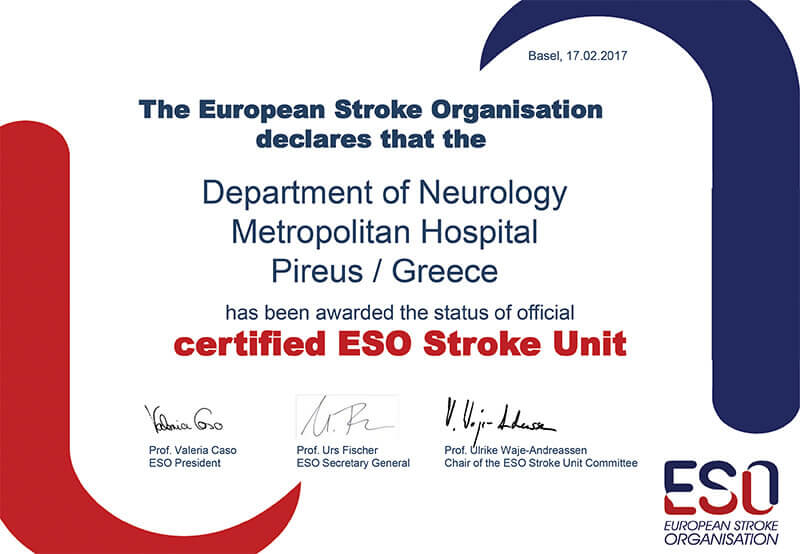
The Stroke Unit of Metropolitan Hospital is the first organized and fully equipped Stroke Intermediate Care Unit (Stroke Unit / IMCU) in Greece. In parallel, the Stroke Unit is the first in the country to receive international certification from the ESO (European Stroke Organisation).
The Unit operates uninterruptedly 24/7, 365 days a year, offering immediate and specialized care for every acute case.
What is a Stroke Episode?
A stroke causes brain damage, which is due to either an interruption of blood supply to an area (ischemic stroke) or bleeding from a ruptured blood vessel (hemorrhagic stroke).
Globally, strokes constitute the:
- Second most common cause of death in people over 60 years of age
- Most common cause of disability in the vast population
- Second leading cause of dementia syndrome
In Greece:
- Approximately 310 stroke cases per 100,000 people aged 45–85 are recorded annually, resulting in around 33,000 hospitalizations.
- The number of stroke cases continues to increase, driven by longer life expectancy and the high prevalence of major risk factors, including hypertension, diabetes, hyperlipidemia, smoking, alcohol use, and cardiovascular disease.
- Post-stroke mortality is estimated at 26% during the first month and rises to approximately 37% within the first year.
- One-third (1/3) of stroke survivors experience disability and require constant assistance, support, or supervision by others.
In Europe, 1,900,000 stroke episodes occur anually, with hospitalization costs exceeding €38 billion each year.
The Decisive Importance of Immediate Reaction
When a stroke occurs, the most critical factor for a patient's prognosis is the speed with which medical assistance will be provided. The faster blood flow and brain oxygenation are restored, the higher the chances of a positive outcome, while minimizing the risk of permanent disability or brain damage.
In the world of medicine, the phrase "time is brain" accurately captures this urgency. According to scientific studies, for every minute a patient goes without appropriate treatment, approximately two million vital neurons are destroyed. Therefore, the immediate initiation of medical care significantly improves the individual's prognosis and recovery.
Therapeutic Approaches: Thrombolysis and Mechanical Thrombectomy
Metropolitan Hospital implements the most advanced reperfusion methods. The two main treatments utilized today are Intravenous Thrombolysis and Mechanical Thrombectomy.
- Intravenous Thrombolysis: Medication designed to disolve the clot and restore normal blood flow. This treatment is applicable up to 4.5 hours after the first symptoms appear.
- Mechanical Thrombectomy: A minimally invasive procedure in which a thin catheter is guided through the femoral artery to the brain in order to remove the clot. It can be performed up to 6 hours after the episode, with a potential extension up to 24 hours in specialized centers, equipped with advanced imaging techniques (CT Perfusion). These techniques provide real-time mapping of the threatened brain area (penumbra) and the area already lost (ischemic core).
What is Mechanical Thrombectomy?
In an acute stroke involving a large vessel occlusion, a blood clot blockes a major artery of the brain. Failure in reopening the vessel within a short period can lead to high mortality and functional disability, incuding loss of speech or paralysis on one side of the body.
With Mechanical Thrombectomy, a puncture is made in the femoral artery in the leg, similar to a coronary angiogram. Using specialized catheters, we reach the vessel blocked by the clot and deploy a special device (stent retriever) that opens inside the clot. Under continuous aspiration, the stent is removed along with the clot out of the blood vessel.
International Standards and Operation of the Stroke Unit
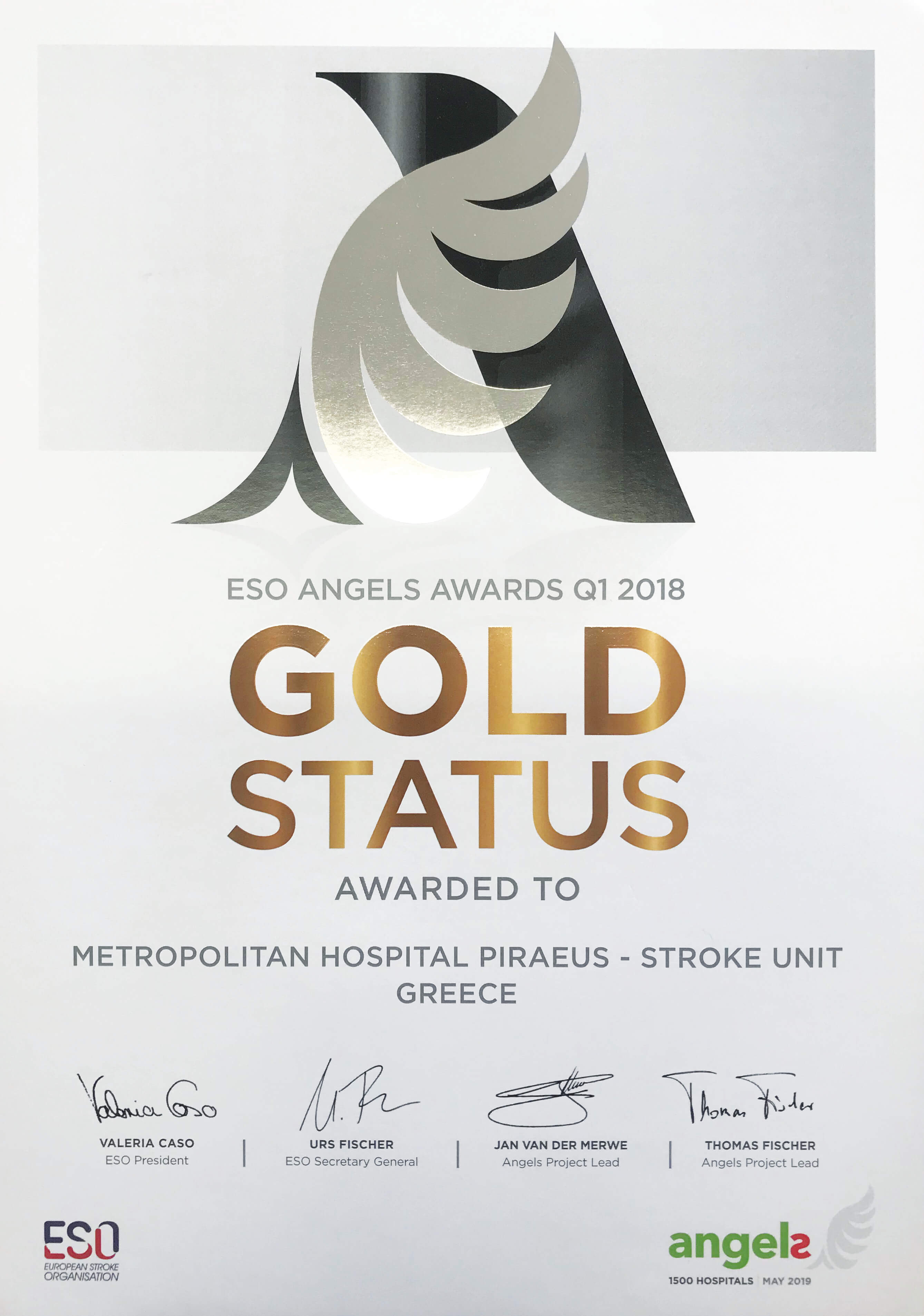
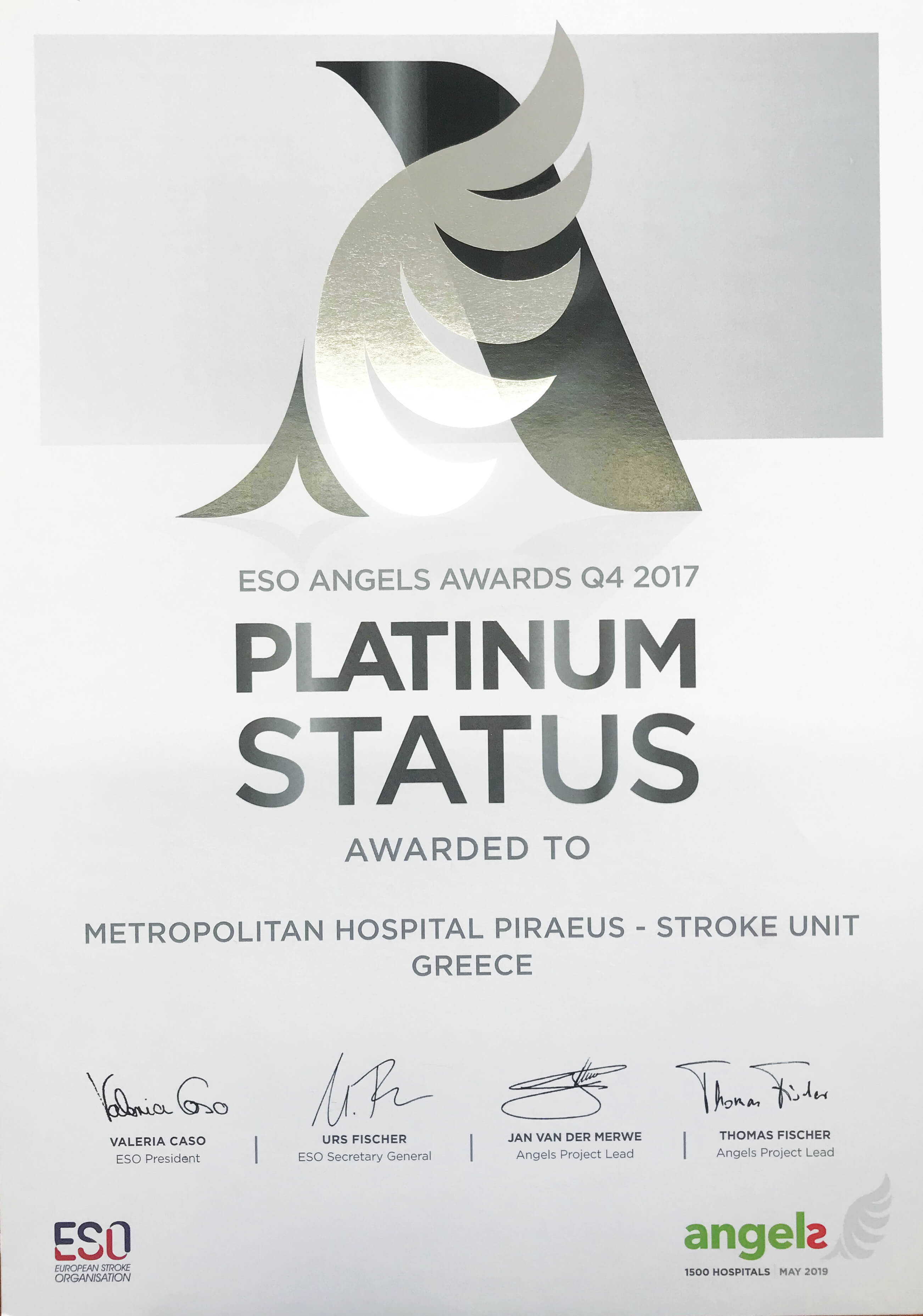
Metropolitan Hospital's Stroke Unit combines cutting-edge infrastructure with a leading medical team, ensuring the highest possible chances for successful rehabilitation.
Why choose us:
- European Certification: The first Unit in Greece recognized by the international Certified ESO Stroke Unit designation, placing it among the top stroke centers in Europe.
- 24/7 Readiness: Operating uninterruptedly 24 hours a day, 365 days a year, for the immediate care of acute cases.
- Specialized Team: Staffed by top-tier neurologists and an interventional neuroradiologist, strictly applying the most rigorous international medical protocols.

Unit Personnel
- Director: Klearchos Psychogios, PhD, University of Athens
- Interventional Neuroradiologist: Georgios Magkoufis, Assistant Professor of Interventional Neuroradiology, NKUA
- Special HDU Neurologists: Athina Andrikopoulou, Chrysoula Liantinioti, Ermioni Papageorgiou
- Consultants: Neuroradiologists, Neurosurgeons, Cardiologists, Vascular Surgeons, Internists, Physiatrists, etc.
STROKE UNIT
9 Ethnarchou Makariou & 1 Venizelou Streets, GR-18547 Neo Faliro
+302104809000, +302104809150