


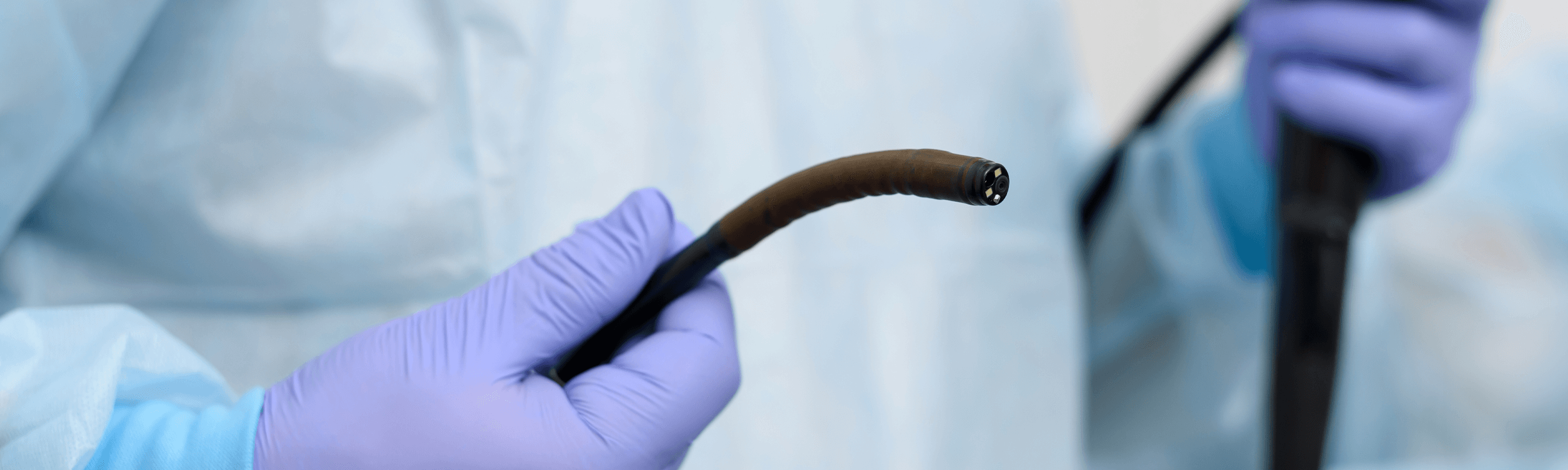





Modern bronchoscopy and interventional pulmonology involve specialized endoscopic procedures aimed at diagnosing and treating conditions of the lungs, bronchi, and thoracic wall (pleura).
Advanced bronchoscopy and thoracoscopy techniques allow for safe and accurate diagnoses, leading to effective therapies for a wide range of respiratory symptoms and diseases.
During the procedure, a specialized anesthesiologist administers the appropriate anesthesia (or sedation), making the intervention completely painless and well-tolerated by the patient. In most cases, only a short hospital stay is required, within the framework of simple day care.
Procedures are performed at the fully equipped Bronchoscopy – Interventional Pulmonology Department of Metropolitan Hospital by appointment.
Scientific Team
Our team consists of experienced pulmonologists and bronchoscopists, combining expertise with advanced technology to ensure the highest level of care. With a focus on accuracy and innovation, advanced diagnostic and therapeutic bronchoscopy techniques are employed to manage a wide spectrum of respiratory conditions.
Bronchoscopists – Physicians of the Pulmonology Department
Nikolaos Koufos, Director, Interventional Pulmonology Department
Elena Nikolakopoulou, Anesthesiologist
Athanasios Chamaïdos, Head of Nursing
(Secretary to Dr. Koufos: Katerina Chaini, Tel. +30 210 4809319)
(Endoscopy Secretaries: Evangelia Saoulidou – Vasiliki Panagiotidou, Tel. +30 210 4809122)
Medical Services – Cutting-Edge Technology
The Bronchoscopy – Interventional Pulmonology Department is equipped with state-of-the-art endoscopic tools, designed for diagnostic and therapeutic precision.
In summary:
- Video bronchoscopy (bronchial biopsy, bronchoalveolar lavage (BAL), culture and cytology of bronchial washings, transbronchial lung biopsy)
- Endobronchial ultrasound (EBUS) (sampling material/tissue from mediastinal or pulmonary lymph nodes and lesions)
- Guided bronchoscopy for diagnosing pulmonary nodules
- Bronchoscopy for early detection of dysplasia/lesions (autofluorescence bronchoscopy, narrow band imaging)
- Electrocautery, Argon-Plasma (A/P) coagulation, cryotherapy, etc. for hemostasis, tumor removal, and airway stenosis management
- Rigid bronchoscopy (for foreign body removal, hemostasis, etc.)
- Stent placement to restore tracheal and bronchial lumen patency in cases of benign or malignant stenosis
- Specialized lung biopsies for interstitial lung diseases (e.g., pulmonary fibrosis)
Advanced Diagnostic Techniques
These innovative bronchoscopy methods enable optimal airway visualization, safe biopsy sampling, and the collection of specialized specimens such as cultures, microscopic, and cytological examinations, forming the basis for tailored therapeutic planning.
In malignant diseases, accurate staging requires cutting-edge technologies such as endobronchial ultrasound (EBUS-TBNA), ideally combined with elastography systems and immediate microscopic evaluation of the collected sample (Rapid On-Site Evaluation – ROSE). This groundbreaking technique allows real-time imaging of the lesion and precise sampling.
For specific pulmonary diseases such as interstitial lung disease, pulmonary fibrosis, hypersensitivity pneumonitis, and sarcoidosis, cryobiopsy of the lung is now possible. This innovative approach enables larger tissue samples from the lung parenchyma, increasing diagnostic accuracy and avoiding unnecessary tests.
By combining advanced diagnostic tools, a thorough investigation of respiratory symptoms and conditions is ensured, providing timely and accurate diagnoses as the foundation for individualized and effective treatments.
Outpatient Clinic – Reference & Coordination Center for Pulmonary Nodules
The Pulmonary Nodule Outpatient Clinic serves as a dedicated reference and coordination hub for the comprehensive evaluation, diagnosis, and follow-up of patients with suspected lung findings. A specialized team of pulmonologists, supported by oncology and imaging experts, provides immediate assessment using advanced diagnostic tools and clear clinical algorithms. Each patient is guided swiftly and safely to the appropriate next step—whether that involves further imaging, interventional diagnostics, or therapeutic planning—eliminating delays and uncertainty. The clinic acts as a true “coordination center,” ensuring seamless communication between specialties and delivering clear, structured information to every patient.
Through a single visit, individuals receive a precise overview of their condition, an organized plan of action, and direct access to the most suitable experts. In essence, the clinic streamlines the entire patient journey with accuracy, clarity, and continuity.
Therapeutic Interventions
In addition to diagnostic procedures, our department specializes in therapeutic bronchoscopy for the management of benign and malignant airway stenosis. These include rigid bronchoscopy, cauterization, cryotherapy, balloon dilation of the airway, and airway stent placement.
These minimally invasive techniques are designed to relieve symptoms in patients with benign or malignant diseases—such as shortness of breath, cough, infections, or hemoptysis—while significantly improving overall lung health.
Our approach to every patient is holistic. The Director and the Bronchoscopy – Interventional Pulmonology team (pulmonologists, pathologists, cytologists, radiologists, thoracic surgeons, oncologists, and others) are available for any questions or clarifications.
The Bronchoscopy – Interventional Pulmonology Department of Metropolitan Hospital reflects our commitment to excellence in healthcare.